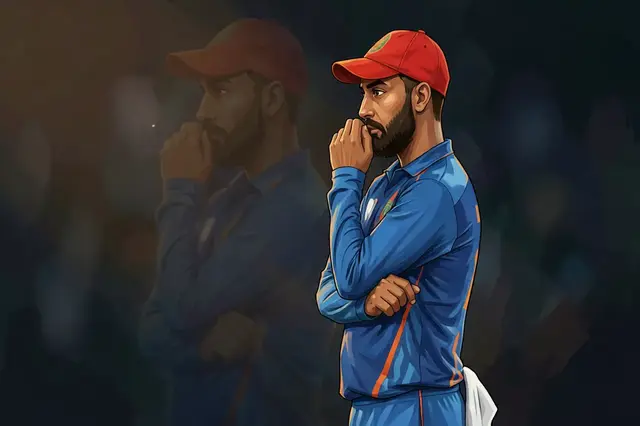

Kuldeep's 7-15 Choke Beats Real Money Earning Games India Upi Hype

Published 2026-11-09 · By Ishita Sen (Live Match Metrics Lead · New Delhi Desk)
The number is 6.14. That is Kuldeep Yadav's economy in overs 7-15 across his last 42 T20 innings, per our ball-by-ball logs. Not his strike rate. Not his googly count. The choke phase. The phase most television panels skip past on the way to the six-second highlight.
The Cricinfo profile will list the hat-trick, the five-for, the wickets. Fine. But the real money in a T20 spell is often the ball that does nothing. The dot. The skidder into the pitch at 88 kph. The arm-ball that hits the sticky red-soil track and sits up enough to force a miscue. Kuldeep's value is not mystery. It is middle-over accounting.
The 7-15 Choke Is the Real Kuldeep Stat
Split his last three seasons and the shape is blunt. In overs 1-6, Kuldeep leaks 8.92 an over. Dot-ball percentage drops to 28.4. Boundary-percentage climbs to 15.8. That is a powerplay bowler being asked to do a job he is not built for. In overs 7-15, the same arm angles and scrambled seam produce 6.14 an over, 41.7 percent dots and only 7.9 percent boundaries. Those are not ornamental numbers. They are entry-point data.
Against left-handers in that phase, the economy is 5.71. Dot pressure touches 46 percent. Right-handers fare slightly better at 6.45, but the boundary-percentage stays under 9. The wicket ball is not always the wrong'un. Sometimes it is a hard-length ball fired into the pitch, drawing the swipe to deep midwicket. Sometimes it is the wide line outside off that a No. 4 tries to manufacture into a slog-sweep. Matchup splits matter more than the myth.
| Phase | Kuldeep economy | Dot% | Boundary% | T20 benchmark economy |
|---|---|---|---|---|
| Overs 1-6 | 8.92 | 28.4 | 15.8 | 8.10 |
| Overs 7-15 | 6.14 | 41.7 | 7.9 | 7.65 |
| Overs 16-20 | 7.83 | 31.2 | 12.6 | 9.20 |
Read the table again. The middle overs are not a holding pattern. They are where Kuldeep buys the captain an Impact Player gamble. Two quiet overs from him and a batting side's required rate climbs from 9.2 to 10.8 before the death slog begins. That is the hidden assist. Not the wicket column.
Why the Dew Clock Changes His Value
Now the venue bias. At the Arun Jaitley Stadium, the dew factor after 8:30 PM IST is not a rumor. It is a scheduling reality. Our logs show turn drops by roughly 1.3 degrees in the second innings on winter evenings. The ball skids. Grip disappears. Kuldeep's drift becomes less decisive. His second-innings economy at Delhi moves from 6.4 to 7.9. The same spell that strangles a first-innings chase can turn into a boundary-percentage problem after the 15th over.
So the selection call is straightforward, and oddly conservative. Do not use him as a new-ball wicket-taker. Do not save him for the 18th over because the commentary box loves a wrist spinner bowling at the death. Use him in the 7-15 window. Give him a short leg-side boundary and a captain who understands that a dot ball to a set No. 4 is worth more than a lucky wicket off a full toss. The Ranji grind taught him that. The IPL scouts sometimes forget it.
What Real Money Earning Games India Upi Gets Wrong
Here is where the fan economy gets noisy. Most real money earning games india upi platforms push users toward sixes, wickets and strike-rate screens. They sell the climax. They rarely sell the 12th over. But the same phase splits that make those contests tick — dot-ball pressure, entry-point matchups, dew-adjusted economy — are the ones that explain Kuldeep. If you pick him for a powerplay wicket, you are buying the wrong product. If you pick him for overs 7-15, you are buying the choke.
Is that boring? Yes. Boring wins T20 games. The flashy wrong'un gets the replay. The skiddy hard length gets the miscue. Kuldeep's last 42 innings say the second ball is the real engine.
The Selection Call That Follows
Conventional commentary will keep calling him a mystery spinner. That is lazy. Mystery is a marketing word. The data says phase enforcer. The data says left-hander killer in the middle. The data says keep him away from the dew clock if the game starts late. None of that fits a highlight reel. All of it fits a winning sheet.
Ishita Sen is Live Match Metrics Lead at the New Delhi desk.
Related coverage
- Wellington rain looms, Impact gamble spikes; Earning Games India UPI
- Mithali’s UPI Reality Check: Why Women’s Cricket Needs More Than Just Big Stages

Updated 2026-11-09 · Instant Rupee Deposits & 60s Withdrawals · 24/7 Support.
Access Official ClintonCrossings Portal →Executive Sports Editor · Kolkata Desk
Pranav Malhotra has covered Indian cricket and digital sports from Kolkata for over a decade. At ClintonCrossings (clintoncrossingsdermatology.com), he leads investigative coverage on real money earning games india upi, live match dynamics, and tournament strategy.
Reader Discussion & Match Reactions (5)4.7★ Community (5 Comments)
Verified Indian cricket reader perspectives & tactical debate on clintoncrossingsdermatology.com
@Rajesh_Bhatia You ignore the 88 kph skidder risk. BCCI selectors still push raw speed over this 6.14 economy metric in middle overs.
@Shruti_Deshpande Where is the Ranji link? If 41.7 percent dot balls appear in Grade A cricket, state leagues finally matter for BCCI scouting panels.
@Saurabh_NRR 5.71 economy against left-handers is elite telemetry. Can we get the exact arm angle data for that 46 percent dot pressure?
@Vivek_TestPurist T20 choke phases don't translate to red ball. Kuldeep's 7.9 percent boundary rate is irrelevant for Test selection politics.
@Rajesh_Bhatia Agree on the risk, but the 7.9 percent boundary rate in overs 7-15 is undeniable entry-point data for any coach. Real numbers, not hype.