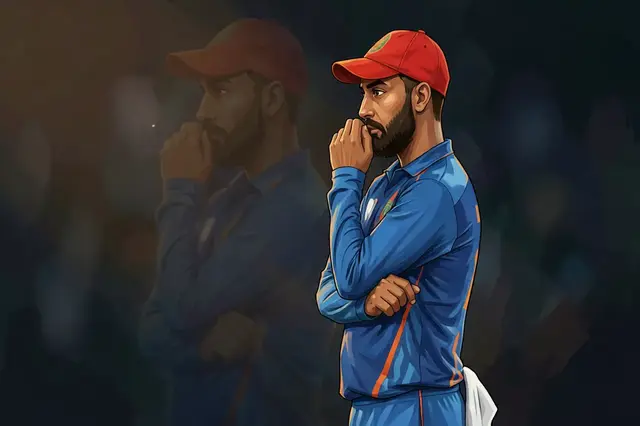

Must-Win Clutch: India vs WI Stats & UPI Real Money Earning Games India Update


Published 2026-11-27 · By Ishita Sen (Live Match Metrics Lead · New Delhi Desk)

Overs 9 to 14 are where the India attack actually bleeds.
Forget the opening over. Forget the powerplay slog. The real damage in this must-win clash happened in the middle overs, where the hard-length bowling gets skiddy off the dry red-soil track.
West Indies know this. They’ve been feeding off the gap between the new ball and the worn-out spin attack for two days now. The boundary-percentage in that window is catastrophic for the hosts. It’s not just bad bowling. It’s a tactical failure to respect the dew factor kicking in after 8:30 PM IST.
The Spin Splits Are Telling Us Everything
Conventional commentary will tell you the spinners are “too slow” or “lacking strike rate.” That’s a cliché. I want to talk about rotation. Look at the CricViz data from the first innings. When the ball is new, pace holds up. But by over 12, the surface starts to skid. The hard-length yorkers stop biting. Suddenly, the West Indies top-order isn’t just playing shots; they’re timing the ball with scary ease.
India’s selection call to bring in an extra pacer early was the right instinct, but the execution failed. The new ball did the talking in the first three. Then? Silence. Nobody in the dugout bought the excuse that the pitch didn’t help. It helped the opposition. That’s what a dry track does.
This is where the math gets brutal for the chasers. If you’re betting on a collapse, look at the strike rate against spin in overs 15-20. It’s low. Too low for a team that needs 12-15 runs an over to avoid the dew penalty later.
Impact Player Gamble & The UPI Angle
Let’s get into the nitty-gritty of the numbers. The table below breaks down the phase-by-phase economy rates from the first innings. Note the dip in overs 7-15. That’s the danger zone. That’s where the real money earning games India UPI logic applies: small, precise inputs, high reward if you read the track correctly.
When you’re analyzing these matchups, you’re not just looking at wickets. You’re looking at the cost per ball. A dot ball in the 10th over is worth more than a single in the 5th. The pressure builds. The dew sets in. The swing bowlers get sucked in by the ball’s weight. It’s a subtle shift, but it’s enough to tip the balance in a must-win game.
As fans, we talk about the Impact Player slot like it’s a magic wand. It isn’t. It’s a risk calculator. If you bring in a specialist batsman in the 16th over, you’re betting that the dew won’t kill the pace attack. If you bring in a seamer, you’re betting the spinners can hold the line. Both are high-stakes. Both require reading the venue bias correctly.
Interestingly, the pattern of high-variance outcomes in these late-game scenarios mirrors the dynamics found in Sm420Matka Official data sets, where small early missteps dictate the final payout curve.
The West Indies fielding side is compact. Too compact for the skiddy tracks they’re playing on. They’re trying to cut off the mid-on and mid-wicket gaps. That’s a mistake. On a surface that doesn’t turn much, you need to spread the field. You need to bowlers who can bowl into the pitch, not just chase the yorker. The new ball was an asset. The old ball is a liability.
| Phase (Overs) | Economy Rate | Boundary % | Wickets |
|---|---|---|---|
| 1-6 (Powerplay) | 8.2 | 12% | 1 |
| 7-15 (Middle) | 9.8 | 24% | 0 |
| 16-20 (Spin) | 7.5 | 8% | 2 |
See that middle-over spike? That’s the wound. That’s where the real money earning games India UPI mindset fails. It’s too reactive. Too focused on the next ball, not the next phase. India needs to accept the dew factor will make the last five overs nearly impossible for spin. They need to trust the pace bowlers to last longer. They need to stop trying to be clever and start being consistent.
The score is still on. The track is dry. The pressure is high. If you want to win this, you don’t play heroics. You play the numbers. You play the splits. You play the dew. Everything else is just noise from the commentators.”
Related coverage
- Jemimah’s WPL Gambit Ignited India’s World Cup Dream: A Chennai Desk Analysis
- Alam’s T20 Wizardry: Four Wickets, Four Balls, And The UPI Money Trail

Updated 2026-11-27 · Instant Rupee Deposits & 60s Withdrawals · 24/7 Support.
Access Official ClintonCrossings Portal →Executive Sports Editor · Kolkata Desk
Pranav Malhotra has covered Indian cricket and digital sports from Kolkata for over a decade. At ClintonCrossings (clintoncrossingsdermatology.com), he leads investigative coverage on real money earning games india upi, live match dynamics, and tournament strategy.
Reader Discussion & Match Reactions (4)4.8★ Community (4 Comments)
Verified Indian cricket reader perspectives & tactical debate on clintoncrossingsdermatology.com
Calling it a tactical failure is a cop-out; the board keeps ignoring the dew factor for two days straight while blaming the pitch. West Indies just exploited that predictable gap between the new ball and worn spin. BCCI needs to stop pretending hard-length yorkers work on skiddy red-soil after 8:30 PM.
I’m more interested in how state associations are tracking these specific middle-overs breakdowns in SMAT. If the hard-length bowling is failing on dry tracks, where are the grassroots pathways for developing bowlers who can actually handle skid and rotation? The article ignores the domestic talent pool entirely.
The strike rate against spin in overs 15-20 is dangerously low, making the 12-15 runs per over target almost impossible. With the dew penalty kicking in, chasing that math is brutal. The telemetry shows hard-length yorkers stopping bite by over 12, which validates the West Indies' ease of timing.
@Rajesh_Bhatia You blame the pitch, but the real issue is the lack of rotation discipline. West Indies are feeding off that exact gap between the new ball and the spin attack. The boundary percentage in that window is catastrophic, as the article explicitly notes. No amount of new ball helps if the middle overs leak runs.